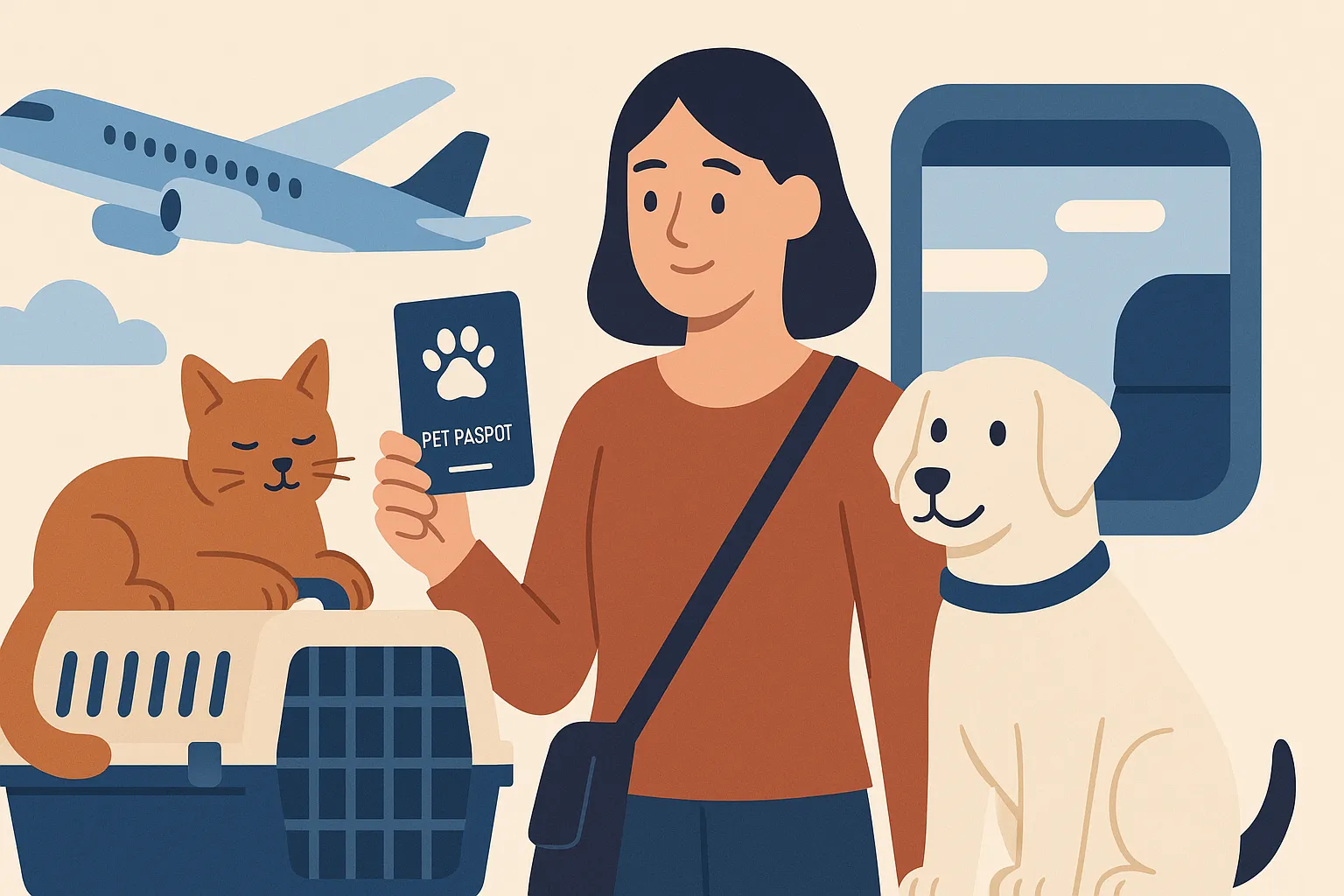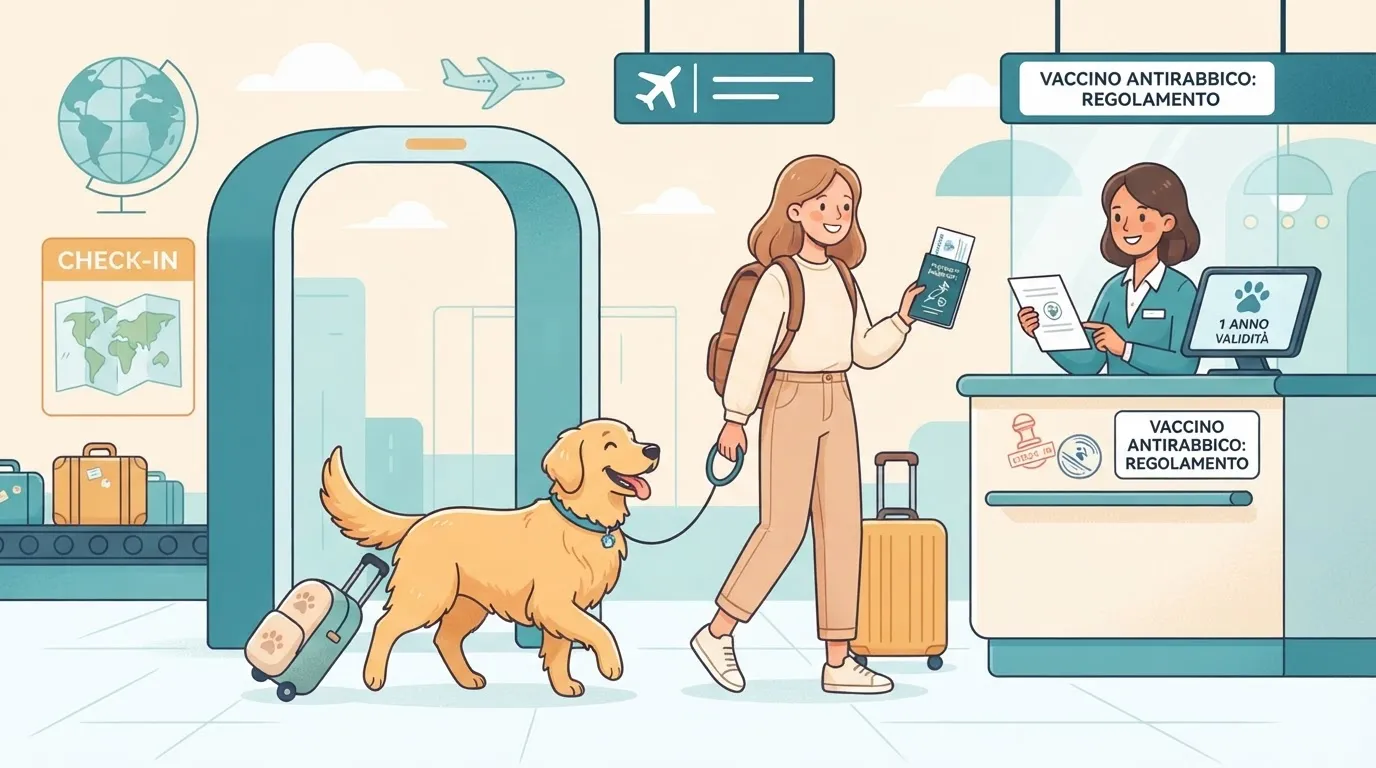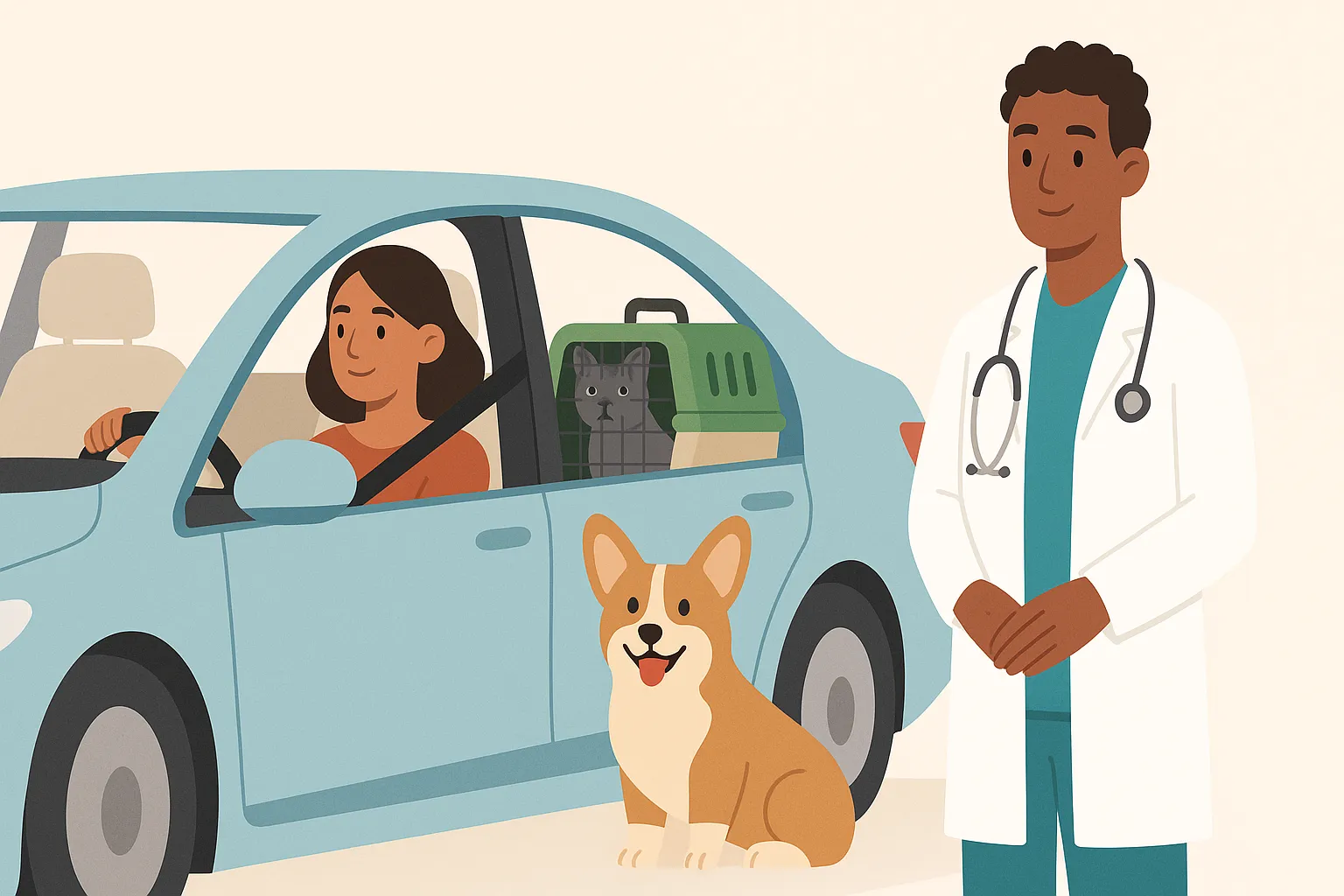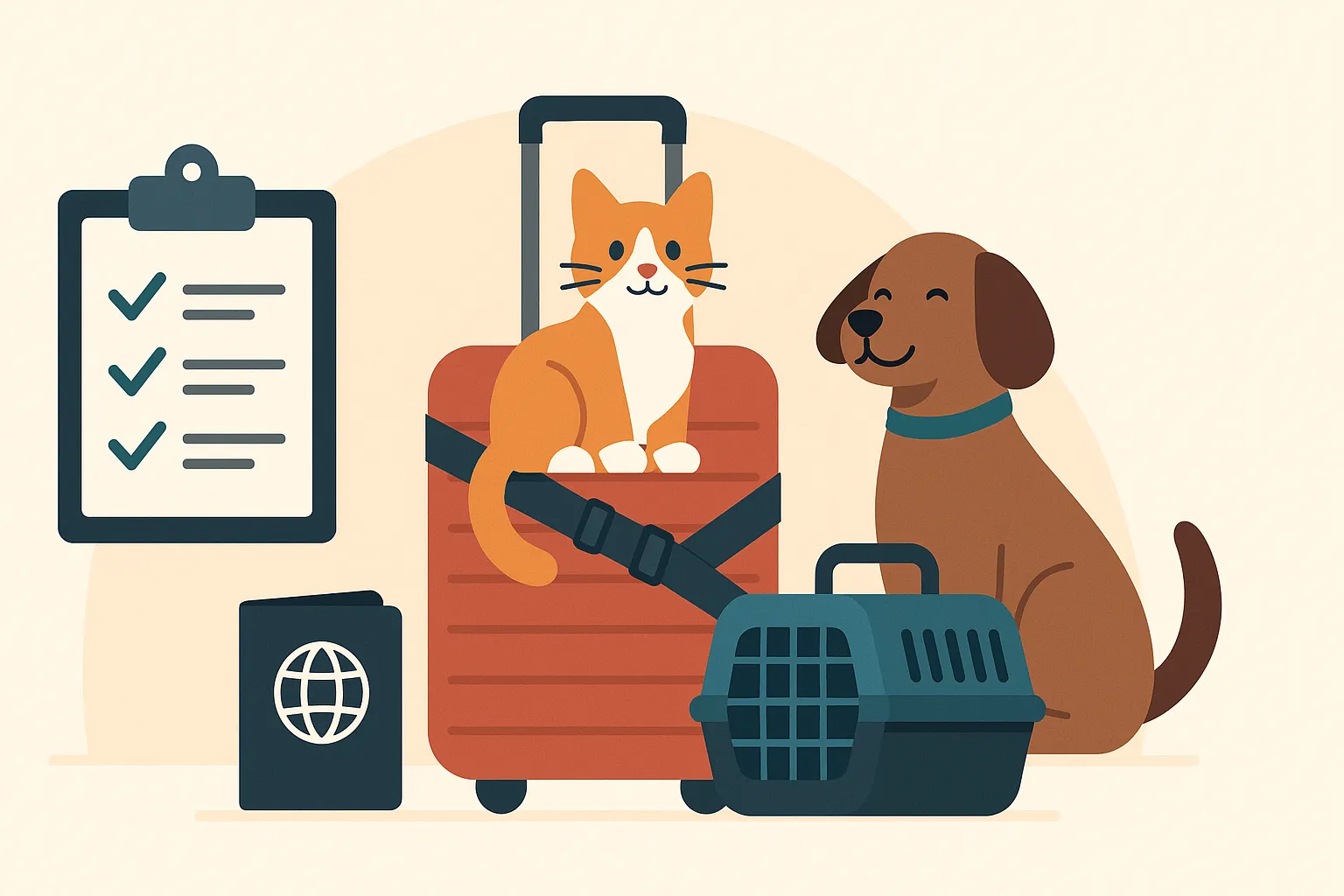
Traveling with a dog and a cat can turn a simple holiday into a wonderful experience... or into a source of stress if something goes wrong: a missing document at the border, a forgotten medication, an out-of-compliance carrier, a dog without a muzzle on the train, a cat terrified in the car.
That’s why we’ve put together a single dog and cat travel checklist with everything you really need:
- documents for traveling with pets in Italy, the EU, and outside the EU
- what to pack in your dog and cat suitcase (food, accessories, toys)
- first aid and medication kit
- practical tips for safety by car, train, plane, and ship
- measures to reduce stress, anxiety, and motion sickness
The goal: to help you prepare for departure without last-minute panic and with the peace of mind that everything is under control.
Quick dog and cat travel checklist (overview)
If you’re packing in a hurry, here’s a quick checklist to tick off. Below you’ll find each item in detail.
Essential documents
- Health booklet / vaccination record
- Registered microchip and updated details
- European pet passport (if required)
- Rabies certificate (if required)
- Health certificates required by the destination country
- Insurance policy (dog liability, travel coverage)
- Regular veterinarian’s contact details + emergency clinics near your destination
- Printed or digital copies of pet-friendly bookings
What to bring when traveling with dogs and cats
- Usual food (at least for most of the stay)
- Treats and rewards
- Bowls (water and food, including one travel bowl)
- Enough water for the journey
- Leash, collar/harness with ID tag and phone number
- Approved carrier (especially for cats and small dogs)
- Muzzle (mandatory in many contexts for dogs)
- Poop bags, wipes, absorbent pads
- Bed, blanket, or mat
- Favorite toys, scratching pad or portable scratching post for the cat
- Litter, litter box, and scoop (for the cat)
Medication and emergency kit
- The animal’s regular medications (with prescription if needed)
- Parasite treatment (fleas, ticks, mosquitoes)
- Saline solution, sterile gauze, gentle pet-safe disinfectant
- Tick remover
- Dedicated digital thermometer
- List of doses and medication administration times
Documents for traveling with dogs and cats: what you really need
The paperwork is the part that can ruin a holiday if underestimated. The documents for traveling with pets vary depending on:
- destination (Italy, EU, non-EU)
- mode of transport (car, train, plane, ship)
- carrier/transport company (especially for flights and ferries)
Always check the latest information with the local veterinary authority, the Ministry of Health, and the official website of the destination country. Here you’ll find a practical basic guide.
Documents for traveling in Italy with dogs and cats
For trips within Italy, you generally need:
- Microchip: mandatory for dogs, strongly recommended for cats
- Registration with the Canine Registry (for dogs)
- Health booklet with up-to-date vaccinations
- Certificate of registration in the feline registry (if available, not mandatory but useful)
- Muzzle available for the dog (not a document, but often required in public settings)
Many pet-friendly accommodations may ask for:
- proof of recent vaccinations, especially against rabies in risk areas
- a health certificate issued by the veterinarian (valid for only a few days)
Documents for traveling in Europe (EU) with pets
For most EU countries, dogs and cats need:
- European pet passport, issued by an authorized veterinarian
- Readable microchip (or clearly readable tattoo, if still accepted and applied before a certain date)
- Valid rabies vaccination:
- administered after the microchip is implanted
- with a minimum waiting period (usually 21 days) before departure
Some EU countries may require additional rules (e.g. specific parasite treatments before entry). Always check the official websites of the destination country.
Documents for traveling outside the EU with dogs and cats
Outside the European Union, rules vary widely from country to country. In general, the following may be required:
- International health certificate issued by the competent authority (in Italy, the local health authority / official veterinarian)
- Rabies serology test (antibody titer) carried out in advance
- Complete vaccination records
- Quarantine period upon arrival or before departure (for some countries)
In this case, it is essential to:
- Check the requirements well in advance of departure (even 4–6 months ahead).
- Rely on your veterinarian for the correct sequence of vaccines, tests, and certificates.
Rules for different modes of transport: what to know before booking
Beyond general documents, there are specific rules for each means of transport. It’s essential to always read the carrier’s rules (airline, railway, ferry, bus company) before buying your ticket.
Traveling by car with dogs and cats
Italian traffic regulations state that:
- the animal must not create danger or obstruction while driving
- it is recommended—and in practice necessary for safety—to use:
- a dog seat belt attached to the harness
- a carrier secured with a seat belt or placed safely
- a net/divider between the trunk and rear seats for large dogs
For cats, the carrier is always the safest choice: securely fixed, partially covered to reduce visual stimuli.
Traveling by train with dogs and cats
Each company has its own rules, but in general:
- Cats and small dogs:
- must stay in the carrier
- often travel free or for a small surcharge
- Medium/large dogs:
- travel on a leash
- muzzle required (even if not strictly enforced, it’s best to always have one with you)
- additional ticket at a reduced fare
Always check:
- time restrictions or train categories
- exclusions from certain carriages (e.g. first class, dining area)
- whether you need to reserve a pet spot
Traveling by plane with dogs and cats
This is probably the most regulated and variable option. Usually there are three possibilities:
- Pet in cabin (up to a certain weight, soft carrier, exact size requirements)
- Pet in pressurized cargo hold (approved IATA rigid carrier)
- Transport refused for certain breeds or conditions (e.g. brachycephalic breeds, very large dogs, seriously ill animals)
Before booking:
- read the pet policy on the airline’s website (weight, dimensions, allowed/excluded breeds)
- check the additional costs (which can be significant)
- ask your veterinarian whether your pet is fit to fly, especially if elderly or with respiratory/heart conditions
Avoid sedatives without veterinary guidance: they can be dangerous during the flight.
Traveling by ship or ferry with pets
Many companies allow:
- access to dedicated dog areas
- pet-friendly cabins (with advance booking)
- onboard kennels for dogs, with periodic visits from owners
Cats and small dogs often stay in the carrier. Check:
- whether dogs must wear a muzzle
- restricted areas (restaurant, some indoor lounges)
- whether a health certificate issued a few days earlier is required
What to bring when traveling with dogs and cats: the complete suitcase
Let’s move on to the practical part: what should your dog and cat travel checklist include to avoid forgetting anything?
Food, water, and bowls
- Usual food: it’s better not to change brands right before or during the trip to avoid digestive problems.
- Quantity: ideally for the whole stay, especially if you use a specific or therapeutic diet.
- Snacks/treats: useful for rewarding your dog/cat during travel and while adapting to the new home.
- Foldable or travel bowls for water and food during the journey.
- Enough water supply, especially in summer or if you’re traveling to hot areas.
Basic accessories for dogs
- Comfortable, well-fitted collar or harness
- Strong leash (and maybe a spare one)
- ID tag with name and up-to-date phone number
- Muzzle, preferably basket-style and not too tight, to use when needed
- Raincoat/coat if the dog is sensitive to cold or clipped short
Basic accessories for cats
- Sturdy, well-ventilated carrier with a soft mat or towel
- A blanket or garment with your scent to reassure them
- Portable litter box, tray, and scoop
- One extra bag of litter beyond what you think you’ll need, especially if the usual brand is hard to find
Bed, comfort, and routine
Animals appreciate continuity:
- the bed, cushion, or mat they use at home
- favorite blanket
- 1–2 familiar toys (ball, rope, plush toy, scratching pad for the cat)
- possibly a worn T-shirt from the owner to provide a reassuring scent cue
Medication, parasite prevention, and first aid kit
A crucial part of the dog and cat travel checklist is the health kit.
Regular medications
If your animal is on chronic treatment (cardiac, endocrine, dermatological, etc.):
- bring a larger supply of medication than the planned trip length
- keep the treatment plan written by the veterinarian (useful if you need to buy them on site)
- bring the contact details of the veterinarian who follows your dog/cat
For safety, keep medications:
- in a well-closed bag/case
- away from heat and direct light
- separate from human medicines, to avoid confusion
Parasite prevention
Discuss with your veterinarian:
- updated flea/tick treatment
- protection against sand flies if you’re traveling to areas at risk for leishmaniasis
- specific mosquito repellents for animals (never use human products)
Even if they’re not medical treatment, the following also belong in this category:
- parasite collar
- spot-on or tablets
Mini first aid kit
It is not a substitute for a veterinarian, but it can help with minor issues:
- sterile gauze
- light bandages
- adhesive tape for securing dressings (not to apply directly to fur/skin)
- sterile saline solution (to rinse eyes/superficial wounds)
- gentle pet-safe disinfectant (no harsh human products)
- rounded-tip scissors
- tick remover
- digital thermometer for animal use only
For any serious problem (persistent vomiting, severe diarrhea, breathing difficulties, pronounced limping, lethargy), always consult a veterinarian.
Safety during travel: protected pets, calmer trip for everyone
Travel safety is not just about following the rules, but about the real well-being of your dog and cat.
Car safety: organization and breaks
For dogs:
- use a strong harness + specific seat belt
- for large dogs, prefer the trunk with a divider net and non-slip mat
- never let the dog roam free in the car: it can distract the driver and cause accidents
For cats:
- always in the carrier, secured with the seat belt or locked in a stable position
- partially cover the carrier with a cloth to reduce stimuli and stress
Recommended breaks:
- about every 2 hours:
- let the dog out for a bathroom break and some movement
- offer a little water
- cats generally prefer not to be handled during the trip and will usually use the litter box only once they arrive, when it’s available.
Never leave a dog or cat alone in the car, especially in summer: the risk of heatstroke is extremely high within minutes.
Reducing stress, anxiety, and motion sickness
Some animals suffer greatly during travel:
- signs of stress in dogs: excessive panting, drooling, trembling, whining
- signs of stress in cats: loud meowing, rigid immobility, rapid breathing, urinating/defecating outside the litter box
Practical tips:
- gradually accustom your dog/cat to the car with short rides before a long trip
- don’t give large meals right before departure
- use carriers or confined spaces where the animal feels “contained” and safe
- discuss synthetic pheromones, calming supplements, or other non-drug support options with your veterinarian
Avoid improvising sedatives or motion sickness medication without veterinary advice.
Specific checklist: traveling with a dog
A dedicated section for the dog travel checklist, useful if you’re leaving only with your four-legged friend.
Before you leave
- Vaccinations up to date
- Canine registry enrollment and functioning microchip
- EU passport if necessary
- Recent parasite prevention
- Veterinary check-up if the dog is elderly or has health conditions
- Check for dog-friendly facilities (hotels, beaches, restaurants)
- Basic training (recall, “stay,” leash walking)
During the trip
- Seat belt or securely fixed kennel
- Travel bowl with fresh water always available
- Regular breaks for bathroom and walking
- Muzzle within reach
- Waste bags
On vacation
- Respect local rules (leash, allowed areas)
- Never leave the dog alone in unfamiliar places for too long in the first few days
- Check for shade and available water, especially at the beach
- Watch out for local hazards (e.g. pine processionary caterpillars, leishmaniasis)
Specific checklist: traveling with a cat
Traveling with a cat requires special attention, because many felines are less flexible with change than dogs. Here is the cat travel checklist.
Before you leave
- Microchip implanted and registered
- Basic vaccinations up to date (consult your veterinarian)
- Passport if traveling within the EU
- Active parasite prevention
- Get the cat used to the carrier in advance:
- leave it open at home, with blankets and kibble
- make it a “positive” place
During the trip
- Carrier securely closed, ventilated, partially covered with a cloth
- No food immediately before departure; small amounts of water available
- Do not open the carrier in the car or in unfenced areas (high escape risk)
- Possible use of synthetic pheromones on veterinary advice
Once you arrive
- Set up a quiet room just for them at first:
- litter box
- water/food bowls
- bed or hiding box
- Don’t force the cat to explore; let them decide the pace and how to settle in
- Keep meal times similar to those at home
How technology can help: organizing everything with PawsPet
Managing documents, medications, parasite prevention, and veterinary contacts can be complicated, especially if you have multiple pets or travel often.
An app like PawsPet can help you:
- store the full profile of your dog and cat (microchip, ID details, behavior notes)
- record vaccinations, parasite treatments, and veterinary visits, with automatic reminders before they expire
- keep useful certificates and documents at hand in digital form when traveling
- find pet-friendly facilities and professionals (vets, pet sitters, boarding facilities, groomers) near your destination
- track your dog’s movements during walks if you pair it with a compatible GPS device
That way, if you forget a paper at home, you’ll still have all the essential information with you on your smartphone.
Practical tips in short form (final mini checklist)
Before booking:
- check the destination country’s requirements
- read the pet rules of the airline/train/ship company
- make sure the accommodation is truly pet-friendly
A few weeks before:
- update vaccinations and parasite prevention
- request any required health certificates
- get your dog/cat used to the carrier and/or car
On departure day:
- give a light meal
- pack a bag with:
- water
- snacks
- waste bags/litter
- wipes
- essential medications
- bring the health booklet and your veterinarian’s contact details
Conclusion: traveling calmly with dogs and cats is possible
A well-organized vacation with a dog and cat is easier than it seems: the key is to think ahead about documents, safety, and what to bring, using a good travel checklist as your guide.
In short:
- prepare documents for traveling with pets well in advance, especially if going abroad
- don’t improvise with medications and sedatives: consult your veterinarian
- make sure you have a proper carrier, harness, muzzle, and leash to travel safely
- bring a little bit of home in your pet’s suitcase: usual food, toys, and familiar blankets
If you want to make everything even easier:
- register your pets on PawsPet
- upload documents, vaccinations, and treatments
- set reminders for treatments and visits before departure
That way, you can focus on what really matters: enjoying the trip with your dog and your cat, safely and with fewer unexpected issues.
FAQ about traveling with dogs and cats
What documents do I need to travel by plane with a dog or cat?
It depends on the destination and the airline. In general, you need: a readable microchip, a health booklet, an up-to-date rabies vaccination, and, for EU countries, a European pet passport. Some non-EU destinations require serology tests and specific health certificates. Always check with your veterinarian and the airline at least 1–2 months before departure.
Can I take my cat on vacation, or is it better to leave them at home?
It depends on the cat’s personality and the length of the trip. Very anxious, territorial cats or cats that struggle with travel may do better at home with a trusted pet sitter. If your cat is used to changing environments and traveling in a carrier, you can bring them with you by following the cat travel checklist and giving them time to adjust to the new place.
What should never be missing from a dog’s suitcase?
In addition to documents and medication, a dog’s suitcase should always include: collar/harness with ID tag, leash, muzzle, waste bags, usual food, travel bowl, favorite blanket or bed, parasite prevention, and a couple of familiar toys. These are essential for safety, hygiene, and emotional well-being during the holiday.
How can I reduce my pet’s stress during travel?
Get them used to the carrier and car well in advance, avoid large meals before departure, and organize the trip so there are regular breaks (for dogs). For some anxious animals, the veterinarian may recommend synthetic pheromones, calming supplements, or other personalized strategies. If you notice serious symptoms (vomiting, diarrhea, severe agitation), always consult a qualified professional.