When you’re about to leave and find yourself typing “dog boarding near me,” you’re hoping for just one thing: to find a place where your dog will truly be safe, cared for by professionals, and as relaxed as possible. But between dog hotels, family-run boarding, budget facilities, and super-luxury options, figuring out how to choose is anything but simple.
In this article you’ll find a practical guide to:
- understand which type of boarding is right for you (and your dog);
- know what checks to make before booking;
- get a clear idea of how much dog boarding costs and what affects pricing;
- prepare your dog for the stay, reducing stress and surprises.
At the end, I’ll leave you with a printable summary checklist and a few tips on how to use PawsPet to find reliable pet services in your area.
1. Types of dog boarding: what options do you really have?
There’s no single “best dog boarding” option for everyone: there’s only the one that best fits your dog’s personality, health, and routine (and your budget). The main types you might find when searching for dog boarding near you are:
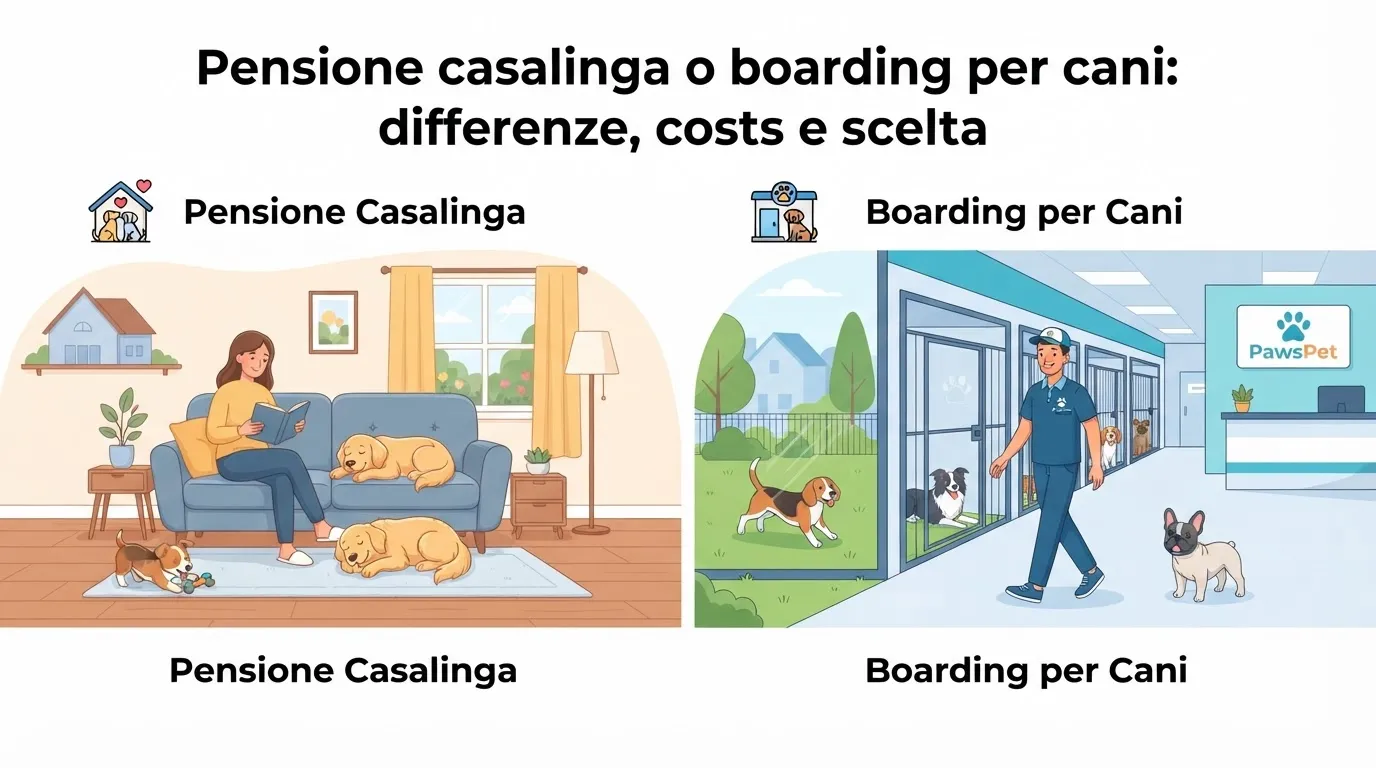
1.1 Traditional boarding kennel (crate + common areas)
This is the most common form of dog boarding:
- each dog has an individual crate/kennel (or a shared one, if agreed upon);
- there are daily outings in a fenced area;
- dogs are cared for by staff members present at set times.
Pros:
- often the most affordable option;
- easier to find outside the city;
- procedures and rules are usually clearly defined.
Cons:
- a more stressful environment for very sensitive dogs;
- socialization is sometimes limited or not very personalized;
- staff may not be on site 24/7.
1.2 Dog hotel / premium boarding
Often called dog hotels, these are highly curated dog boarding facilities:
- spacious crates or rooms, often heated/air-conditioned;
- structured play areas and outdoor paths;
- extra services (grooming, training, webcams, daily reports).
Pros:
- strong focus on environmental comfort;
- more play, walks, and interaction;
- ideal if you want a high-end service that also feels reassuring.
Cons:
- higher costs than traditional boarding;
- not always available in every area.
1.3 Home-based / family boarding
The dog stays in a pet sitter’s or trainer’s home:
- only a few dogs, a home-like setting;
- the dog lives indoors as a “house guest”;
- ideal for dogs used to a sofa-life environment.
Pros:
- warmer, more familiar atmosphere;
- more individual attention;
- often a good choice for older or very anxious dogs.
Cons:
- less structural oversight (rules, licenses, insurance must be checked very carefully);
- if poorly managed, it can be risky (dogs roaming in a garden that isn’t fully fenced, doors left open, etc.);
- limited spots, so it fills up quickly.
1.4 Dog trainer with attached boarding
Some trainers offer boarding with educational activities:
- professional dog care from a behavioral standpoint too;
- the option to combine the stay with training packages.
Pros:
- great for dogs with special needs (insecurity, leash handling, etc.);
- managed by people with specific training.
Cons:
- can cost more than standard boarding;
- limited availability (few dogs accepted, high-demand periods).
2. How much does dog boarding cost? Realistic price ranges
The question “how much does dog boarding cost?” has one answer: it depends. But to help you ориентate, here are some indicative daily/per-dog ranges (average prices in Italy, always to be checked locally):
- Traditional boarding kennel:
€15–25 per day - Dog hotel / premium boarding:
€25–40+ per day - Family / home boarding:
€20–35 per day - Trainer with boarding:
€25–45 per day (or more, if personalized training is included)
2.1 What affects dog boarding costs
Dog boarding costs vary based on:
- Geographic area: cities and tourist destinations cost more.
- Seasonality: peak season (August, holidays) = higher prices.
- Included services:
- number of outings/walks per day;
- equipped play areas;
- medication administration, special diets.
- Type of accommodation:
- indoor/outdoor kennel;
- heated kennel;
- private room in a dog hotel.
- Staff presence:
- daytime only;
- overnight too (24/7 supervision).
2.2 Extra costs to consider
When comparing prices, always ask what’s included and what the extras are. The most common are:
- Medication administration (especially injections or complex therapies);
- Food:
- if you bring your own: often no extra charge;
- if they use their own food: daily surcharge;
- Pick-up/drop-off service;
- Guaranteed single kennel (if your dog can’t share);
- Public holidays or peak season;
- Grooming at the end of the stay.
3. Before booking: key questions to ask the boarding facility
Before even visiting the place, it’s useful to do an initial phone screening or chat. Here are the questions to ask:
3.1 General information
- How many dogs do you host at the same time?
- What does a typical day look like (outings, meals, rest)?
- Is there night staff? If not, how are the dogs monitored?
- Are there resident dogs (belonging to staff) that will interact with guests?
3.2 Health management
- Is an up-to-date health record required?
- Which vaccinations are mandatory to enter the boarding facility?
- How do you handle veterinary emergencies?
(Do you have a reference veterinarian? Do you contact the owner immediately?)
3.3 Behavioral rules
- Do you accept unsocialized dogs or dogs with aggression issues?
- How do you manage dogs that don’t get along with others?
- How are dog introductions handled?
3.4 Pricing conditions
- What is the daily rate and what exactly does it include?
- Are there extra charges for:
- peak season;
- medication;
- special needs (e.g. three walks instead of two)?
- Is a deposit required? What are the cancellation policies?
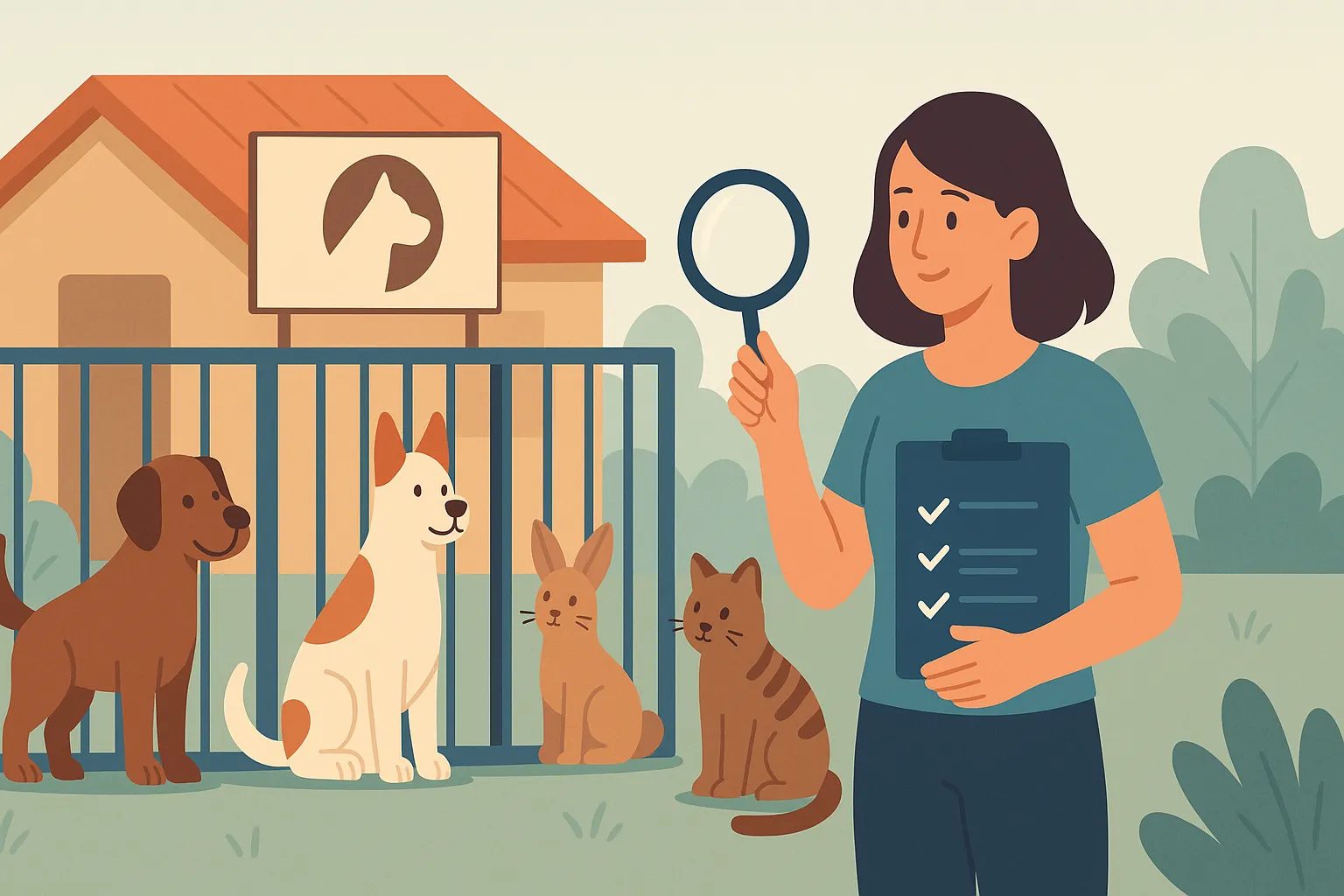
4. Visit checklist: what to inspect in person
Once you’ve identified 2–3 candidate facilities, it’s essential to visit them. Here are the dog boarding checks to make in person.
4.1 Facility and spaces
Check:
- overall cleanliness of kennels, corridors, and play areas;
- presence of strong, lingering odors (a sign of poor hygiene);
- kennels:
- appropriate size for the dog;
- dry floor, no sharp rust or holes;
- sheltered area from heat/cold;
- outdoor areas:
- strong, high fencing;
- gates that close properly, escape-proof systems;
- shaded areas.
Questions to ask:
- Does each dog have access to fresh water 24/7?
- How are summer and winter temperatures managed (heating, ventilation)?
4.2 Number of staff and presence
The staff-to-dog ratio is a key indicator:
- ask how many staff are present during peak times;
- ask how they handle high season (extra staff?).
A good sign:
- staff move calmly, know the names of the dogs present, and explain routines clearly.
4.3 Organization of outings and play areas
Check:
- how many daily outings are guaranteed;
- whether there are separate areas for small, large, and senior dogs;
- how the play groups are formed (size, temperament compatibility).
Positive signs:
- gradual introduction of new dogs;
- care not to force shy dogs into large groups;
- possibility of individual outings (even at an extra cost) for dogs that don’t socialize.
4.4 Safety and insurance
Another key question when looking for the best dog boarding facilities: what happens if something goes wrong?
Ask:
- Do you have insurance coverage for damage to people or property?
- How is an injury between dogs handled?
- How do you document incidents and notify owners?
5. Documents, vaccinations, and health: what is really needed
Every serious boarding facility will have an intake protocol. In general, you’ll be asked for:
5.1 Basic documents
- Up-to-date health record;
- Owner’s details and emergency contact information;
- Details of the veterinarian of reference;
- Any informed consent for emergency treatment.
5.2 Vaccinations and prevention
Depending on the area and type of facility, they may require:
- Core vaccinations (distemper, hepatitis, parvovirus, leptospirosis, etc.);
- Rabies vaccination (mandatory in some contexts or when traveling);
- Prevention against internal and external parasites (worms, fleas, ticks);
- In some boarding facilities, vaccination against kennel cough too (bordetella / parainfluenza).
For any doubt about the vaccination plan best suited to your dog, it is essential to consult your veterinarian: every dog has a different medical history.
5.3 Ongoing treatments and chronic conditions
If your dog:
- takes medication;
- has food allergies;
- suffers from chronic conditions (heart, kidney, epilepsy, etc.);
prepare a summary sheet with:
- medication name and dosage;
- administration time;
- what to do if a dose is missed;
- warning signs to monitor.
Always provide:
- medication in its original packaging;
- prescription or written instructions from the veterinarian, when available.
6. How to tell if the boarding facility is right for YOUR dog
Not every dog experiences boarding the same way. Consider:
6.1 Your dog’s temperament and habits
- Is your dog social or does it tend to isolate itself?
- Is it used to being in new environments?
- Has it already spent days without you?
Based on that:
- very social and active dogs often do well in boarding facilities with play areas and other dogs;
- older, very sensitive dogs, or dogs used to a strict home environment, may do better in home boarding or with a trainer who keeps the number of guests limited.
6.2 Trial run: 1–2 test nights
Before a long stay (e.g. 2 weeks in August), if possible:
- arrange 1–2 trial nights;
- observe how the dog behaves when it comes home:
- is it much more stressed than usual?
- does it eat and sleep normally in the following days?
This isn’t a “scientific” test, but it helps you understand whether the chosen boarding facility is a good match for your dog.
7. What to bring to boarding to help your dog feel better
A good boarding facility will give you a packing list. In general:
7.1 Basic kit
- Health record + required documents;
- properly fitted collar/harness and leash;
- regular food (already portioned, if possible);
- any medication + written instructions.
7.2 Comfort items and “home” objects
To reduce stress:
- blanket or cushion that already smells like home;
- a favorite toy (safe, not easily destroyed);
- if the facility allows it, a worn T-shirt from the owner.
7.3 Routine and personality notes
Write down (even as a simple sheet):
- usual mealtimes;
- energy level (very active, calm, senior);
- how the dog behaves with:
- other dogs;
- strangers;
- children (if relevant);
The more the staff knows your dog, the better they can adapt care to its real needs.
8. Common mistakes when choosing a dog boarding facility
When searching for dog boarding near me, it’s easy to fall into a few traps:
8.1 Choosing based only on price
Understanding dog boarding costs is important, but:
- a very low price may indicate:
- too many dogs for the amount of staff;
- poorly maintained spaces;
- no insurance coverage;
- a high price doesn’t automatically guarantee quality, but it can allow investment in:
- trained staff;
- safety;
- comfortable spaces.
8.2 Booking without a visit
Leaving your dog with someone without seeing where it will stay is a real risk. If the boarding facility doesn’t allow guided visits (outside the dogs’ rest hours), that’s a sign to consider very carefully.
8.3 Not being honest about behavioral problems
Out of fear that the dog won’t be accepted, some owners:
- downplay episodes of aggression;
- don’t disclose previous escape attempts;
- stay silent about bites to other dogs or people.
That’s dangerous for everyone: the dog, the staff, and the other guests.
It’s better to find a facility specialized in handling more complex dogs than to risk accidents.
9. Quick practical checklist: how to choose a good dog boarding facility
Initial selection (online or on an app like PawsPet)
- Search “dog boarding near me” and filter:
- by distance;
- by reviews;
- by services offered (dog hotel, family boarding, etc.).
- Save 2–3 facilities that look promising.
- Check whether they have:
- clear rules;
- a health record requirement.
Initial contact
- Call or message to ask about:
- availability for your dates;
- costs and what’s included;
- handling of veterinary emergencies;
- health requirements (vaccines, parasite prevention).
- Ask whether it’s possible to have:
- a guided visit;
- a short trial stay.
On-site visit
- Check:
- cleanliness and odors;
- safety of fences and gates;
- water availability;
- shaded and sheltered areas.
- Assess:
- how staff interact with dogs;
- number of dogs present vs. staff;
- how outings and groups are managed.
Before departure
- Prepare:
- health record;
- clearly labeled food and medication;
- a sheet with habits and emergency contacts.
- Ask for:
- regular updates (photos, messages, videos);
- what to do if something unexpected happens (return delays, etc.).
10. How PawsPet can help you choose and manage boarding for your dog
An app designed for pet owners can make it easier to find and manage pet services in your area.
With PawsPet you can:
- search for dog boarding near you by filtering for:
- type (traditional boarding, dog hotel, family boarding);
- reviews from other owners;
- services offered (extra outings, grooming, training).
- save profiles of your favorite facilities and compare prices and services;
- keep always at hand:
- your dog’s profile;
- vaccination and prevention deadlines;
- notes on allergies and treatments to easily share with the boarding facility;
- receive reminders for:
- vaccine renewals before the holidays;
- booking requests during peak season.
If you manage a boarding facility or a dog hotel, listing your business on PawsPet helps you:
- get found more easily by people searching for “dog boarding near me”;
- clearly showcase services, photos, rules, and strengths;
- receive verified reviews and build trust over time.
Conclusions: good boarding is an investment in everyone’s peace of mind
Choosing a safe and reliable dog boarding facility takes time, targeted questions, and at least one in-person visit. But it’s an investment that pays off in:
- peace of mind for you, so you can leave without worry;
- well-being for your dog, which experiences the stay in the most positive way possible;
- a trust-based relationship with the facility, also useful for future needs (work emergencies, weekend trips, family situations).
Use the checklist in this article as your guide, always discuss health matters with your veterinarian, and if you want to make everything easier, try PawsPet to find, compare, and manage the best pet services near you.
FAQ about dog boarding
1. How long can a dog stay in boarding?
There’s no fixed limit: a healthy dog, well prepared and cared for by competent staff, can stay for several weeks.
What matters most is:
- the quality of the facility;
- the dog’s temperament;
- any medical conditions or ongoing treatments (always to be assessed with your veterinarian).
For longer stays, it’s useful to schedule regular updates with the boarding facility (photos, videos, messages).
2. How can you tell if the dog is doing well in boarding?
Some positive signs when they come home:
- after a first rest, the dog eats and drinks normally;
- it doesn’t show prolonged signs of apathy or extreme agitation;
- there are no injuries, limping, or obvious signs of pain.
If you notice major behavior changes or physical issues, contact your veterinarian immediately and inform the facility.
3. Is boarding better than an in-home pet sitter?
It depends on:
- the dog’s personality and habits;
- the home’s level of safety (fenced yard, neighbors, etc.);
- how much time the pet sitter can dedicate.
Boarding is often preferable if:
- you don’t have neighbors or support networks nearby;
- your dog needs frequent human presence;
- you want a controlled facility with clear procedures.
An in-home pet sitter may be ideal for very territorial dogs or dogs that struggle a lot with changes in environment.
4. When should you book dog boarding?
For peak seasons (August, Christmas/New Year, long weekends):
- it’s wise to book 2–3 months in advance;
- the best facilities fill up quickly.
With PawsPet you can:
- save your preferred services;
- contact them in advance;
- keep an eye on availability and updated conditions.