Giving medications to a dog or cat requires precision, especially when several people care for the same animal. A tablet given twice or a missed dose can happen easily amid busy schedules, changes in routine, and unclear communication.
Good medication management for dogs and cats starts with a simple system: written veterinary instructions, visible schedules, and immediate confirmation after every dose.
Start with the prescription and make it easy to read
Do not rely on memory, packages left on the counter, or scattered chat messages. For each treatment, prepare an up-to-date pet medication record that everyone authorized to care for the animal can consult.
Include clear information without interpreting or changing what the veterinarian prescribed:
- the animal’s name and the medication;
- the form of the medicine, such as a tablet, drops, or suspension;
- the prescribed amount and frequency;
- the administration time or time window;
- the start date and, if provided, the end date;
- any instructions received, such as “with food” or “on an empty stomach”;
- the veterinary practice’s name and contact details;
- any notes about storage and prescription renewals.
Avoid abbreviations that could be misunderstood. If the prescription is unclear, the product is different from usual, or you have questions about the amount, ask the veterinarian for confirmation before proceeding. Do not replace medications, formulations, or administration methods on your own.
Organize schedules around your actual routine
A plan works only when it fits everyday life. Link medication times to recurring moments, such as breakfast, returning from work, or dinner, but only when this is consistent with the professional instructions.
To create a reliable routine:
- choose a precise time for each dose instead of vague instructions such as “morning”;
- set a pet medication reminder on your phone or on a shared calendar;
- store medications where indicated by the veterinarian or package leaflet, out of reach of animals and children;
- prepare only the dose due at that moment, rather than leaving loose tablets around;
- record the administration immediately after giving it.
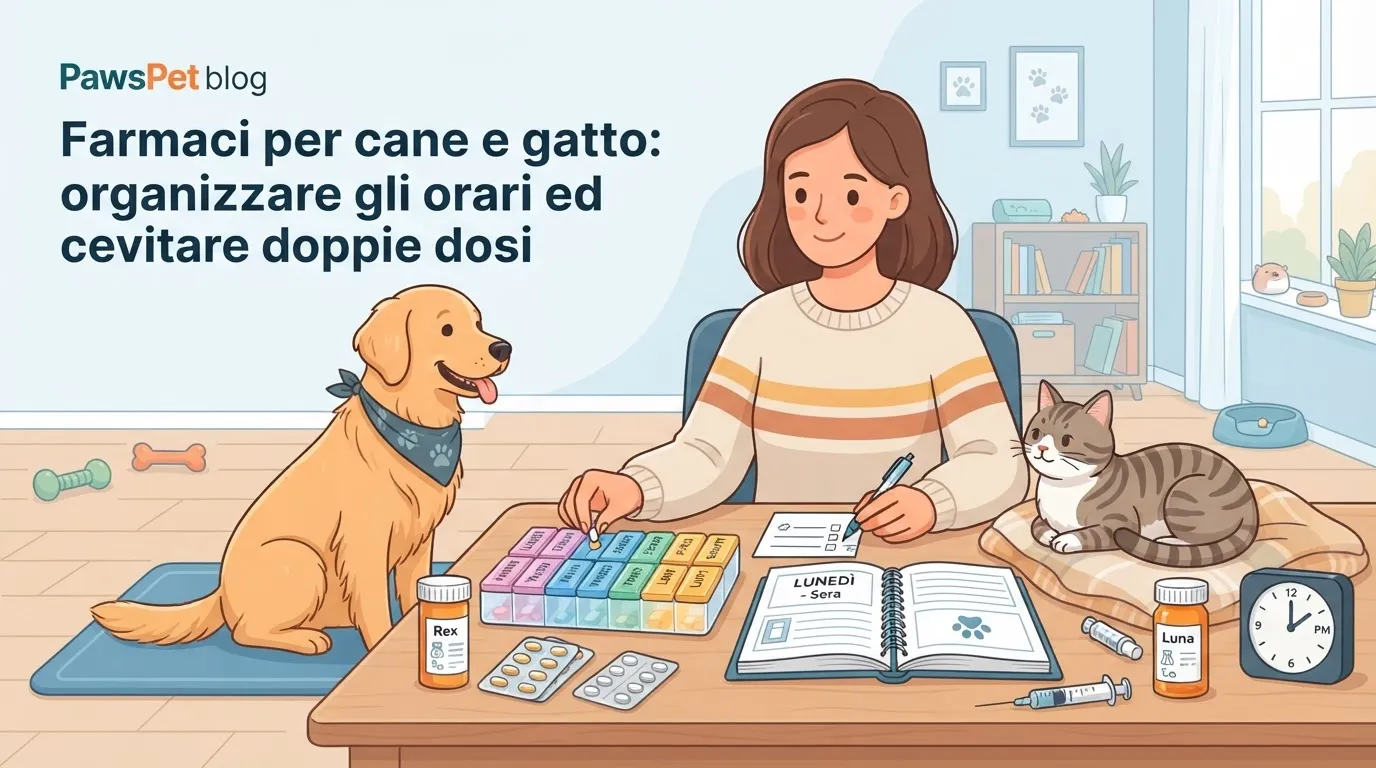
A weekly pill organizer may be useful, but it does not replace checking the prescription. Before filling it, always verify the medication, amount, and treatment duration. For liquid medicines or products with specific storage requirements, ask the veterinarian which method is most appropriate.
How to avoid double doses in a family
The risk of double doses increases when a dog or cat is cared for by several family members, a pet sitter, or a professional during absences and work shifts. The key issue is not only remembering the medication; it is knowing for certain whether it has already been given.
Set a shared rule: whoever gives the dose records it immediately, including the date, time, and their initials or name. Do not postpone the update.
You can use a paper chart in the kitchen or a shared digital note. A solution such as PawsPet allows you to keep treatments, notes, and reminders together in the animal’s health management, making it easier to check what has already been done before giving a dose.
Before giving a medication, follow this mini-checklist:
- check the medication record;
- verify the date and time of the last recorded dose;
- ask the person who was present for confirmation if an update is missing;
- do not give a dose “just in case”;
- record the action as soon as it is complete.
If you cannot determine whether a dose was given, contact the veterinarian or the veterinary service listed in your instructions for case-specific guidance.
Handle delays, refusals, and handoffs carefully
Dogs and cats may refuse a tablet, vomit shortly after receiving medication, or eat only part of the food containing it. In these situations, do not assume the entire dose was taken and do not automatically repeat the medication.
Record what happened, the time, and the amount you believe may have been swallowed. Then ask the veterinarian what to do. The same care is important when a dose is missed: making up the dose or changing the schedule without professional guidance may not be appropriate.
When leaving the animal with a family member or pet sitter, hand over the treatment in an organized way:
- provide the updated medication record;
- show where the medications are stored;
- explain how to confirm each dose;
- mention any difficulties already known;
- identify whom to contact in case of questions or unexpected events.
A careful handoff reduces misunderstandings and supports the animal’s well-being.
FAQ about medications for dogs and cats
What should I do if I do not know whether my dog or cat has already taken the medication?
Do not give a second dose without confirmation. Check the medication record, contact the person who cared for the animal, and, if the uncertainty remains, call the veterinarian for safe guidance.
Can I hide the medication in food?
Only if this method is compatible with the instructions you received. Some medications require specific administration conditions. Also, if the animal does not finish the meal, you cannot know how much medication was taken.
How can I remember to renew a treatment?
Set a reminder several days before the expected end and check with the veterinarian in advance whether the treatment should continue. Recording medications and appointments in PawsPet helps keep the animal’s health routine organized.